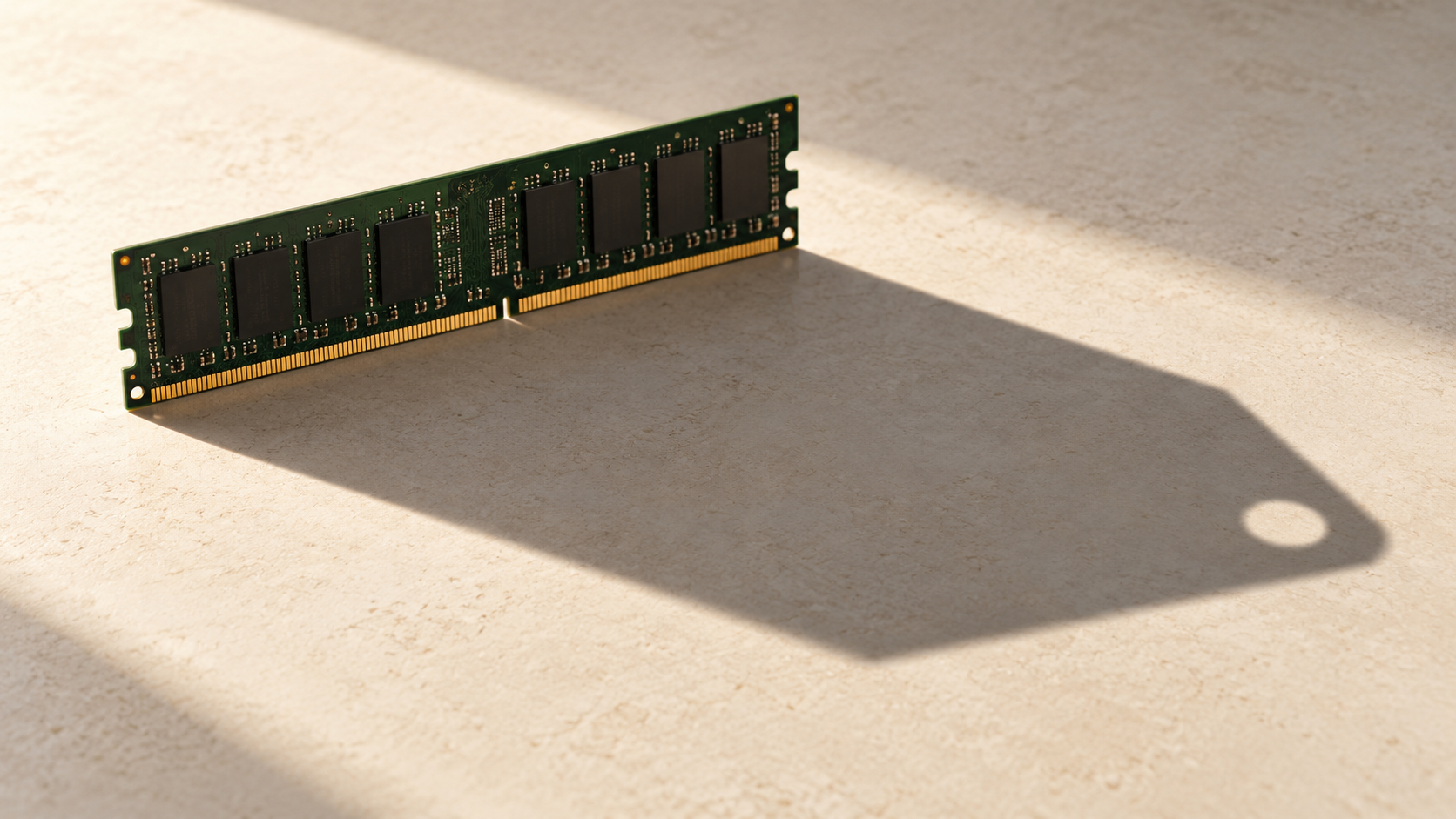
AI-driven demand is putting pressure on memory supply, making it more important for businesses to plan upgrades carefully and maintain equipment that still meets their needs.
A delayed delivery or a higher memory quote can affect more than a purchasing decision. The answer starts with understanding which upgrades are necessary and which can wait.
Why AI Demand Reaches Beyond AI Servers
Different memory products share production pressures
AI systems need fast access to large amounts of data. That increases demand for high-bandwidth memory, or HBM, alongside conventional server memory.
RAM is a broad category of temporary working memory. DRAM is the technology used in most server memory, while HBM is an advanced form of DRAM designed to move data quickly.
Micron’s March 2026 outlook identified HBM growth, cleanroom constraints and long construction lead times as limits on memory supply growth. It expected tight conditions for both DRAM and NAND to continue beyond 2026.
Storage faces pressure too
SSDs store data persistently and generally use NAND flash. They are different from RAM, but growing data center demand can place pressure on both markets. Businesses should check availability for the exact components they need rather than assume every product follows the same price trend.
What This Means for Your IT Budget
Upgrade plans need room to change
A quote collected during budget planning may no longer reflect the price or delivery window available when an order is placed. Confirm quote validity, compatible alternatives and delivery dates before committing a project to a fixed schedule.
Replacement delays can become an operations problem
When an upgrade slips, existing systems must keep working. That makes maintenance coverage, replacement parts and escalation procedures important parts of the transition plan.
A system does not automatically become unsuitable when its warranty ends. Its condition, workload, support options and security requirements should guide the decision.
Make Maintenance Part of the Upgrade Plan
Post-warranty maintenance can give suitable equipment more time in service while a business prepares its next investment. It can also offer another option when renewing original equipment manufacturer, or OEM, support becomes expensive.
Extended Technical Solutions supports this approach through post-warranty and EOSL maintenance for enterprise infrastructure. ETS coverage includes access to Level-3 engineers, replacement parts and onsite support, with service options ranging from next-business-day to four-hour onsite response under the agreed plan.
Hardware maintenance has a specific role. It does not replace software patching, restore manufacturer access to restricted firmware or automatically establish regulatory compliance. Review those requirements separately before extending any system’s life.
Four Steps Before Buying More Hardware
1. Check whether memory is the actual bottleneck
Review utilization over time, workload peaks and application requirements. Poor performance may involve storage latency, configuration or unnecessary processes. A targeted correction may be enough.
2. Review the equipment already in service
Record support dates, hardware condition, spare capacity and business importance. Identify systems suitable for continued use and those that need replacement because of performance, security or compatibility limits.
3. Consider tested pre-owned components
For compatible systems, tested pre-owned memory or replacement parts may offer another sourcing route. Confirm specifications, traceability, testing, warranty terms and returns before purchasing.
4. Match coverage to business impact
A critical production system may need faster onsite response than equipment with an acceptable recovery window. Set coverage around operational needs instead of applying the most expensive agreement to every asset.
Plan Around Your Workloads, Not a Price Forecast
Memory markets change, and a forecast is not a guaranteed purchase price. The practical goal is to reduce exposure to rushed orders and unsupported equipment.
Keep reliable systems maintained, replace equipment when there is a clear reason and build flexibility into upgrade schedules.
ETS works with resellers, MSPs and solution providers to deliver post-warranty maintenance through flexible support agreements. If rising component costs are affecting a refresh plan, an ETS maintenance review can help identify suitable equipment to keep supported while the next upgrade is planned.